
Choosing a new radiator involves more than picking a style that suits your room. One of the most important decisions you will make – and one that tends to be overlooked – is whether the radiator you choose can heat the space effectively. Get it right, and your room will reach a comfortable temperature efficiently and without wasted energy. Get it wrong, and you could end up with a radiator that either fails to warm the room properly or costs far more to run than it should. At the heart of this decision is a single figure: the BTU rating. Understanding what BTU means, how it relates to your room and how to use it when comparing radiators will give you the confidence to choose the right product every time.
What is a BTU?
BTU stands for British Thermal Unit and was originally defined as a unit of measurement for the amount of energy required to raise the temperature of one pound of water by one degree Fahrenheit. While that definition belongs firmly in the world of physics, its practical relevance to homeowners is straightforward: in the context of heating, BTU is simply a measure of how much heat a radiator can produce and release into a room over the course of an hour. When you see a radiator listed with a BTU rating, for example, 3,000 BTU or 8,500 BTU, that figure tells you how much thermal energy the radiator is capable of outputting under standard test conditions. The higher the BTU rating, the more heat the radiator can generate.
It is worth noting that BTU ratings for radiators are typically calculated at a specific temperature difference between the water running through the radiator and the ambient air in the room, known as Delta T. This standardised measurement allows manufacturers and buyers to compare radiator outputs on a like-for-like basis. You may also encounter watts as an alternative measurement of heat output and the two are directly linked. One watt is approximately 3.41 BTU per hour, so converting between them is straightforward if you need to cross-reference specifications.
Do I need to worry about BTU when choosing a radiator?
Yes! Every room in your home has a specific heating requirement, a minimum amount of energy that must be supplied to bring it up to a comfortable temperature and maintain it there, even on the coldest days. That requirement is expressed in BTU. A radiator's BTU rating tells you whether it can meet that requirement. If the radiator's output matches or slightly exceeds the room's requirement, it will heat the space comfortably and run efficiently. If the output falls well short, no amount of turning up the thermostat will compensate – the radiator simply does not have the capacity to do the job.
This is why BTU ratings are not merely a technical detail for engineers and installers. They are a practical tool for homeowners. When you understand how to measure BTU requirements and how to read radiator specifications, you stop choosing radiators based on appearance alone and start making decisions that will serve you well for years to come.
What affects how much BTU a room needs?
Most rooms are different and the BTU requirement of any given space depends on a range of factors. Understanding these factors helps you arrive at a more accurate estimate and avoid the common mistake of simply selecting a radiator based on what fitted in the previous space.
Room dimensions are the starting point. The larger the floor area and the greater the volume of air that needs to be heated, the higher the BTU requirement will be. A small bedroom of 10 square metres will need significantly less output than an open-plan kitchen and living area of 35 square metres. However, floor area alone does not tell the full story.
Ceiling height plays an important role because it determines the actual volume of air in the room. Standard ceiling heights of around 2.4 metres are accounted for in most standard BTU calculations, but older homes and period properties often feature considerably higher ceilings, sometimes exceeding 3 metres. In those cases, the volume of air to be heated is substantially greater, and the BTU requirement must be adjusted upwards accordingly.
Insulation quality is another critical factor. A well-insulated room retains heat effectively, meaning a lower-output radiator may be perfectly adequate. A poorly insulated room – one with draughty gaps, minimal loft insulation or uninsulated walls – loses heat rapidly and will demand a higher BTU output to compensate. In older properties, especially those that have not been upgraded for decades, poor insulation is one of the most common reasons that heating systems underperform.
Glazing is closely related to insulation in its effect on heat loss. Single-glazed windows are poor insulators and allow a significant amount of heat to escape, particularly during cold winters. Double glazing retains far more warmth, reducing the BTU requirement of a room. If your home still has single-glazed windows, this should be factored into your calculations, as rooms with large areas of single glazing will need meaningfully higher output radiators.
The room's position within the home also influences BTU requirements. Rooms on external walls, corner rooms exposed on two sides and north-facing rooms that receive little direct sunlight all tend to be colder and require higher output. Ground-floor rooms above uninsulated spaces, or rooms below unheated lofts, face similar challenges.
How to estimate the BTU requirement for your room

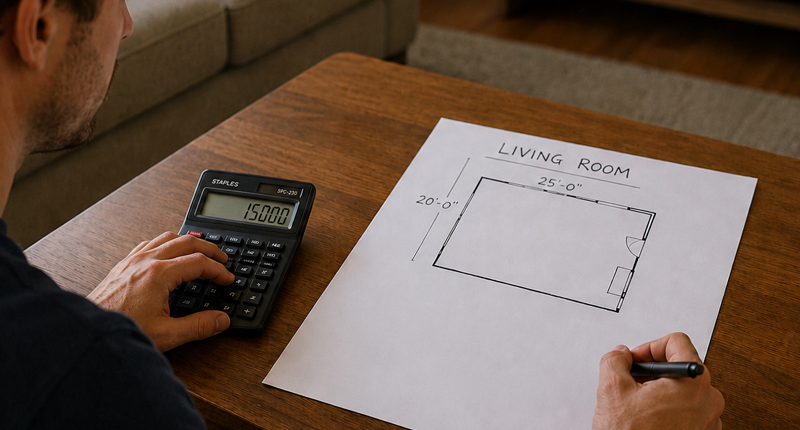
Estimating how much BTU you need does not require specialist knowledge and for most straightforward rooms, a simple calculation will give you a reliable figure to work with. The most widely used method begins with the room’s volume – calculated by multiplying the length, width and height of the room together to give a figure in cubic metres. From there, a standard heating factor is applied based on the type of room and its insulation level.
As a general guide, a well-insulated room in a modern property typically requires around 150 to 175 BTU per cubic metre to heat comfortably. An older, less well-insulated room may require closer to 200 BTU per cubic metre or more. For rooms with large windows or exposed external walls, it is wise to increase the estimate by a further 10 to 15 per cent to account for the additional heat loss those features create.
To put this into practice, consider a typical living room that measures 5 metres long, 4 metres wide and 2.5 metres high. The volume of the room is 50 cubic metres. Applying a heating factor of 175 BTU per cubic metre gives a requirement of 8,750 BTU. If the room features large single-glazed bay windows, adding a 15 per cent uplift brings the figure to just over 10,000 BTU. Armed with that number, you can immediately begin comparing radiators with confidence.
Our BTU calculator is also available and can help you refine your estimate by accounting for specific room characteristics, including the number of external walls, the type of glazing and the desired room temperature. These tools are a useful starting point, though for larger or more complex heating projects, consulting a qualified heating engineer will always give you the most accurate assessment.
Using BTU ratings to compare and choose radiators
Once you have established the BTU requirement for your room, using that figure to choose a radiator becomes considerably more straightforward. Every radiator sold by a reputable supplier will carry a BTU rating as part of its specification, allowing you to filter and compare options based on their heating output rather than their appearance alone.
When comparing radiators, always look for a BTU figure that meets or slightly exceeds your room’s requirement. A small margin above the calculated figure – perhaps five to ten per cent – is sensible, as it gives the radiator a little headroom to heat the room efficiently without running constantly at full capacity. Choosing a radiator that significantly exceeds your requirements, however, is not necessarily advantageous.
BTU ratings also help you navigate the relationship between radiator size and output. In general, larger radiators produce more heat because they have a greater surface area over which heat can be exchanged with the surrounding air. However, this relationship is not purely about physical dimensions. The number of panels a radiator has, the presence or absence of convector fins and the type of design all influence output significantly. Designer radiators, traditional radiators and flat-panel models each have different output profiles and consulting the BTU figure for each specific product will allow you to make a direct comparison regardless of their style.
The consequences of getting BTU wrong
Selecting a radiator without considering BTU output can lead to two distinct problems and both have real consequences for comfort and running costs. An underpowered radiator – one whose BTU output falls noticeably short of the room’s requirement – will struggle to heat the space adequately. The radiator will run continuously and still fail to bring the room up to the desired temperature on colder days. This is a common cause of complaints about heating systems that simply never seem to work well and it is often attributed incorrectly to boiler faults or pipework issues when the real problem is a radiator that was never large enough for the job. Beyond discomfort, an underpowered radiator also places additional strain on the boiler, which must work harder and longer to compensate – a situation that can increase fuel bills and reduce the lifespan of the heating system over time.
An overpowered radiator presents different challenges. A radiator with a BTU output far in excess of the room’s requirement will heat the space very quickly, but this can make temperature control difficult. The room may overheat before the thermostat or thermostatic radiator valve has time to respond, leading to an uncomfortably warm environment and wasted energy. In a well-controlled heating system with properly calibrated thermostatic valves, a moderately oversized radiator can be managed effectively – but a radiator that is wildly oversized for its room will create problems regardless. There is also the practical question of cost: higher-output radiators typically come at a higher purchase price and buying far more capacity than you need is simply an unnecessary expense.
Making better radiator choices
Understanding BTU is one of the best things a homeowner can do before investing in a new radiator. It transforms what can feel like a confusing and technical purchasing decision into a straightforward, evidence-based process. Rather than relying on guesswork or simply replacing like for like, you can approach the choice with a clear figure in mind – your room’s BTU requirement – and use that figure to evaluate every option you consider.
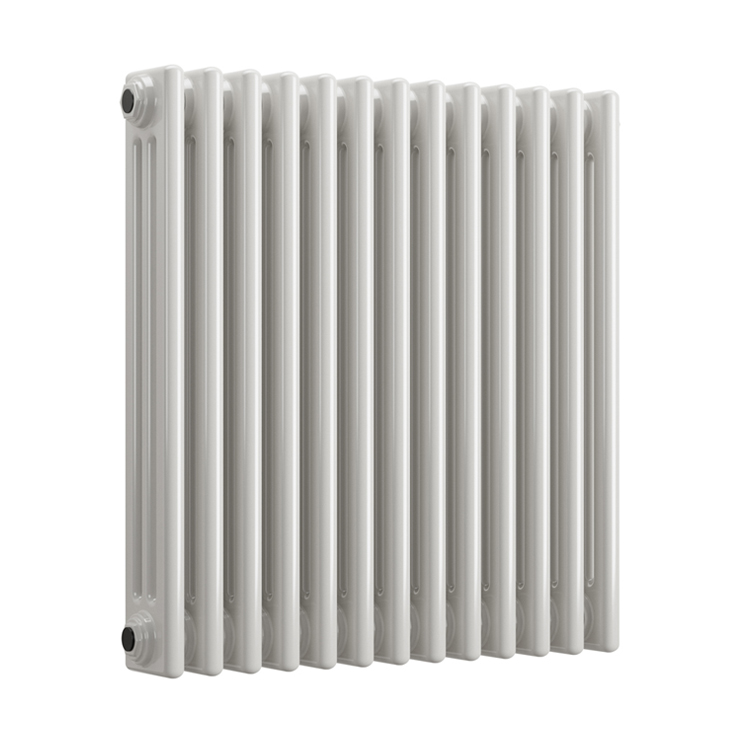
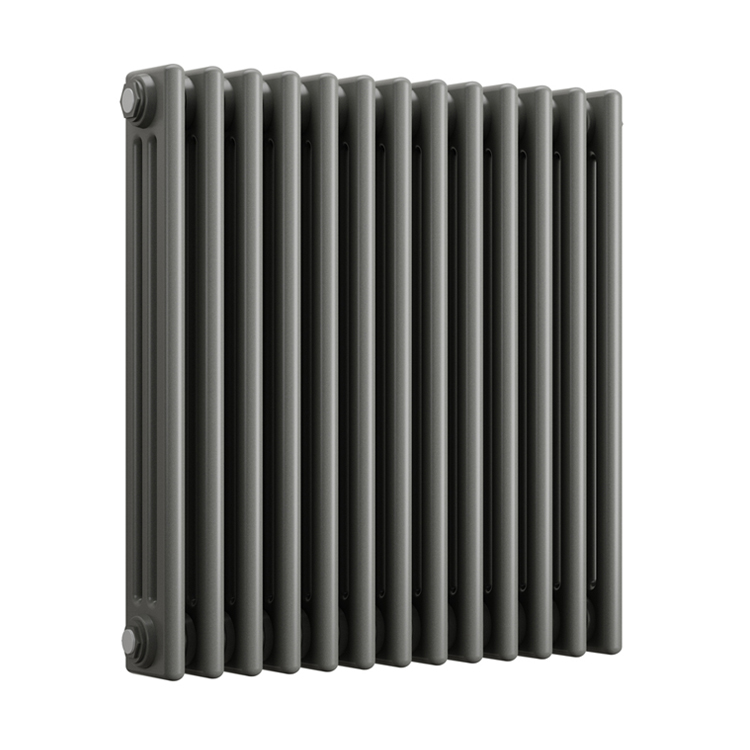
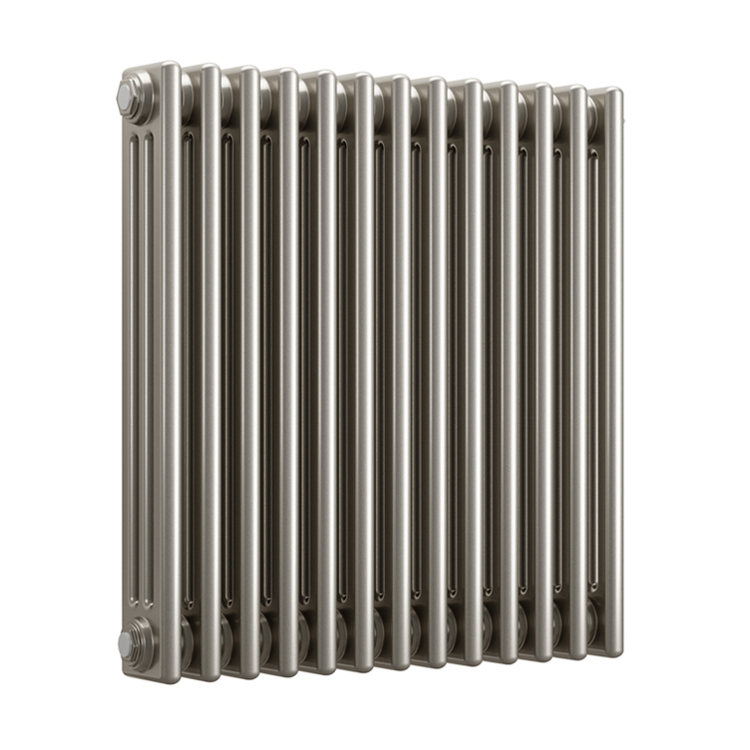
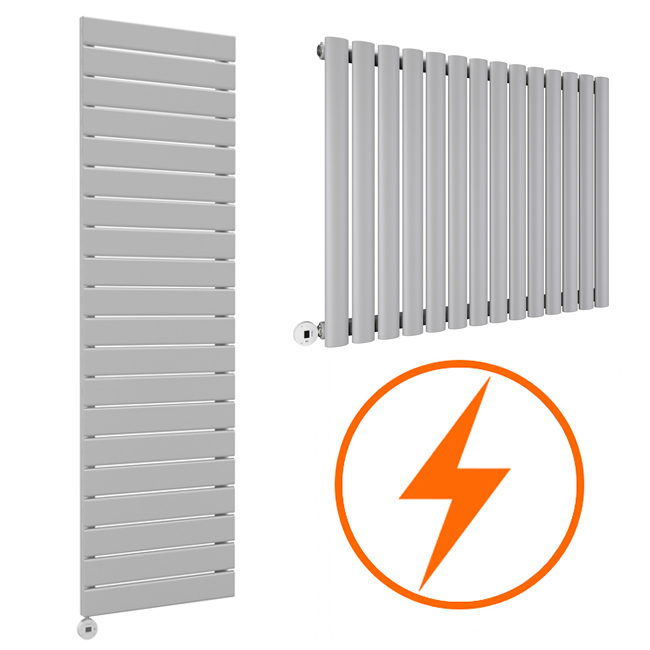
Whether you are replacing an ageing radiator in a period terrace, fitting out a new-build home or upgrading to a stylish column radiator in a living room, the principle is the same. Calculate the BTU requirement for the space, find a radiator that meets it and choose the style, finish and size that suits your home from within that shortlist. That simple sequence is the foundation of any successful radiator purchase.
At Radiator Outlet Ireland, our radiators are listed with clear BTU and wattage specifications, making it easy to find the right output for your room. If you are unsure where to start, our team is always happy to help you work through the calculation and identify the best options for your home.